In the world of microbiology, precision and efficiency are of utmost importance. Every piece of equipment plays a crucial role in ensuring accurate results and successful experiments. One such indispensable tool is the magnetic stirrer. As a supplier of microbiology laboratory equipment, I have witnessed firsthand the significant functions and benefits that magnetic stirrers bring to microbiological research and testing. In this blog, I will delve into the various functions of a magnetic stirrer in microbiology experiments, highlighting its importance and how it contributes to the overall success of these scientific endeavors. Microbiology Laboratory Equipment

Homogeneous Mixing of Culture Media
One of the primary functions of a magnetic stirrer in microbiology experiments is to achieve homogeneous mixing of culture media. Culture media are essential for the growth and cultivation of microorganisms. They provide the necessary nutrients, vitamins, and minerals required for the survival and proliferation of bacteria, fungi, and other microorganisms. However, achieving a uniform distribution of these components in the culture media is crucial to ensure consistent growth conditions for all microorganisms.
A magnetic stirrer uses a rotating magnetic field to spin a magnetic stir bar placed inside the culture media. As the stir bar rotates, it creates turbulence in the liquid, effectively mixing the components of the culture media. This ensures that all microorganisms in the culture are exposed to the same nutrients and environmental conditions, promoting uniform growth. Without proper mixing, some areas of the culture media may have higher concentrations of nutrients, while others may have lower concentrations, leading to uneven growth and potentially inaccurate experimental results.
For example, in a study involving the growth of bacteria, if the culture media is not properly mixed, some bacteria may receive more nutrients and grow faster, while others may be starved and grow slower. This can lead to a skewed representation of the bacterial population and affect the accuracy of any subsequent analyses, such as measuring growth rates or determining the effectiveness of antibiotics. By using a magnetic stirrer, researchers can ensure that all bacteria in the culture are exposed to the same conditions, providing more reliable and reproducible results.
Dissolving Solutes
In addition to mixing culture media, magnetic stirrers are also used to dissolve solutes in microbiology experiments. Solutes such as salts, sugars, and antibiotics need to be dissolved in a suitable solvent to prepare solutions that can be used in various microbiological assays. However, some solutes may be difficult to dissolve, especially if they are in a solid form or have low solubility.
A magnetic stirrer can significantly speed up the dissolution process by continuously agitating the solution. The rotating stir bar creates a vortex in the liquid, which helps to break up the solute particles and increase their surface area in contact with the solvent. This enhances the rate of diffusion and facilitates the transfer of solute molecules from the solid phase to the liquid phase.
For instance, when preparing a solution of an antibiotic for use in a bacterial growth inhibition assay, the antibiotic powder needs to be completely dissolved in a suitable solvent. Without proper agitation, the antibiotic may form clumps or settle at the bottom of the container, resulting in an uneven distribution of the drug in the solution. This can lead to inaccurate dosing and unreliable results. By using a magnetic stirrer, researchers can ensure that the antibiotic is fully dissolved and evenly distributed in the solution, providing consistent and accurate experimental conditions.
Maintaining Oxygenation
Oxygen is essential for the growth and metabolism of many microorganisms, especially aerobic bacteria. In microbiology experiments, it is often necessary to maintain a sufficient supply of oxygen in the culture media to support the growth of these microorganisms. A magnetic stirrer can play a crucial role in this process by promoting oxygenation of the culture media.
As the stir bar rotates in the culture media, it creates a surface agitation that increases the exchange of gases between the liquid and the air above it. This helps to replenish the oxygen supply in the culture media and remove carbon dioxide and other waste gases produced by the microorganisms. In addition, the agitation also helps to prevent the formation of a stagnant layer of liquid at the surface, which can limit the diffusion of oxygen into the culture.
For example, in a bioreactor used for large-scale cultivation of aerobic bacteria, a magnetic stirrer is used to maintain a constant flow of oxygenated media. The continuous agitation ensures that the bacteria are exposed to a sufficient supply of oxygen, promoting their growth and metabolism. Without proper oxygenation, the bacteria may become stressed or even die, leading to poor growth and reduced yields. By using a magnetic stirrer, biotechnologists can optimize the growth conditions for the bacteria and improve the efficiency of the bioprocess.
Preventing Settling and Aggregation
In microbiology experiments, it is important to prevent the settling and aggregation of microorganisms and other particles in the culture media. Settling occurs when the particles in the liquid accumulate at the bottom of the container due to gravity, while aggregation refers to the clumping together of particles. Both settling and aggregation can lead to uneven distribution of the microorganisms in the culture media, which can affect the accuracy of experimental results.
A magnetic stirrer can prevent settling and aggregation by keeping the particles in suspension. The continuous agitation created by the rotating stir bar helps to break up any aggregates that may form and keeps the particles evenly distributed in the liquid. This ensures that all microorganisms in the culture are exposed to the same conditions and prevents the formation of localized areas with high or low concentrations of microorganisms.
For instance, in a particle counting experiment, if the particles in the sample settle or aggregate, it can lead to inaccurate counting results. By using a magnetic stirrer to keep the particles in suspension, researchers can obtain more representative samples and ensure the accuracy of the particle counting method.
Temperature Control
Some magnetic stirrers are equipped with heating or cooling functions, which can be used to control the temperature of the culture media in microbiology experiments. Temperature is a critical factor that affects the growth and metabolism of microorganisms. Different microorganisms have different optimal growth temperatures, and maintaining the correct temperature is essential for their survival and proliferation.
A magnetic stirrer with a heating function can be used to warm up the culture media to the desired temperature. This is particularly useful when working with microorganisms that require higher temperatures for growth, such as thermophilic bacteria. On the other hand, a magnetic stirrer with a cooling function can be used to maintain a low temperature in the culture media, which is necessary for the preservation of some microorganisms or for conducting experiments at specific temperature conditions.
For example, in a cryopreservation experiment, a magnetic stirrer with a cooling function can be used to gradually cool the culture media containing the microorganisms to a low temperature, such as -80°C. This helps to prevent the formation of ice crystals, which can damage the cells and reduce their viability. By using a magnetic stirrer with temperature control capabilities, researchers can ensure that the culture media is maintained at the optimal temperature for the growth and preservation of the microorganisms.
Conclusion
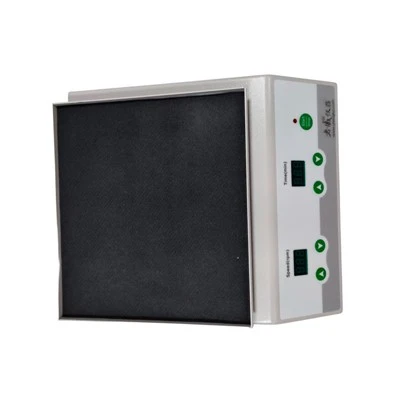
In conclusion, the magnetic stirrer is an essential tool in microbiology experiments. Its functions, including homogeneous mixing of culture media, dissolving solutes, maintaining oxygenation, preventing settling and aggregation, and temperature control, are crucial for ensuring accurate and reliable experimental results. As a supplier of microbiology laboratory equipment, I understand the importance of providing high-quality magnetic stirrers that meet the needs of researchers and scientists in the microbiology field.
TN Tester If you are in need of a magnetic stirrer for your microbiology experiments or any other laboratory equipment, I invite you to engage in a procurement discussion with us. We offer a wide range of magnetic stirrers with different features and specifications to suit your specific requirements. Our team of experts is dedicated to providing you with the best products and services to help you achieve your research goals. Contact us today to start the conversation.
References
- Atlas, R. M., & Parks, J. M. (Eds.). (2013). Handbook of Microbiological Media. CRC Press.
- Madigan, M. T., Martinko, J. M., Bender, K. S., Buckley, D. H., & Stahl, D. A. (2017). Brock Biology of Microorganisms. Pearson.
- Pelczar, M. J., Chan, E. C. S., & Krieg, N. R. (2007). Microbiology: Concepts and Applications. McGraw-Hill.
Hangzhou Qiwei Instrument Co., Ltd.
Hangzhou Qiwei Instrument Co., Ltd. is one of the most reliable manufacturers and suppliers of microbiology laboratory equipment in China, featured by quality products and good service. Please rest assured to buy bulk durable microbiology laboratory equipment in stock here from our factory. We also accept customized orders.
Address: Room 101, Building 25, No. 488-1, Donghu North Road, Linping District, Hangzhou City, Zhejiang Province, China
E-mail: info@qiweilab.com
WebSite: https://www.qiweilab.com/
