Hey there! As a supplier of Dry Electrode Calendering Machines, I’ve been getting a lot of questions lately about how the calendering process affects the electrode’s over – discharge resistance. So, I thought I’d take a deep dive into this topic and share what I know. Dry Electrode Calendering Machine
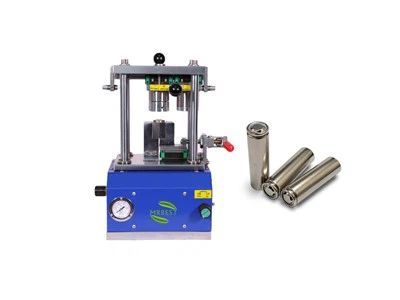
Let’s first understand what the calendering process on a Dry Electrode Calendering Machine is all about. In simple terms, calendering is a crucial step in electrode manufacturing. It involves passing the electrode material through a set of rollers under specific pressure and temperature conditions. This process not only helps to reduce the thickness of the electrode but also improves its density and mechanical properties.
Now, let’s talk about over – discharge resistance. Over – discharge occurs when a battery is drained beyond its recommended voltage level. This can cause irreversible damage to the battery, such as a reduction in capacity, an increase in internal resistance, and even safety issues. So, having good over – discharge resistance is super important for any battery electrode.
One of the main ways the calendering process impacts over – discharge resistance is through density modulation. When we use the calendering machine to increase the density of the electrode, the particles in the electrode material get packed more tightly. This tight packing leads to a more continuous conductive path within the electrode. During over – discharge, a well – connected conductive network allows for a more uniform current distribution. If the current is evenly spread, it reduces the chances of hotspots forming in the electrode, which are often the main cause of damage during over – discharge.
Another aspect is the role of calendering in controlling the porosity of the electrode. Porosity is a measure of the empty spaces within the electrode material. A properly calendered electrode will have an optimized porosity. Too much porosity can result in a less efficient conductive network, as the electrolyte may not be able to fully penetrate and interact with the active materials. On the other hand, too little porosity can prevent the electrolyte from flowing freely, which can limit the battery’s performance.
During the over – discharge process, the electrolyte plays a vital role in maintaining the electrochemical reactions. If the porosity is well – tuned by the calendering process, the electrolyte can move more efficiently through the electrode. This ensures that the reactions necessary for discharging can continue in a more stable manner, leading to better over – discharge resistance.
The mechanical strength of the electrode is also significantly affected by the calendering process. When an electrode is calendered, the rollers apply pressure that helps to bind the particles together. This results in an electrode with better mechanical integrity. During over – discharge, the electrode may experience mechanical stress due to volume changes in the active materials. A mechanically strong electrode is better able to withstand these stresses without cracking or delaminating. If an electrode cracks or delaminates, it can disrupt the conductive path and lead to a significant decrease in over – discharge resistance.
Let’s look at some real – world examples. In some cases, when manufacturers don’t use the right calendering parameters, they may end up with electrodes that have poor over – discharge resistance. For instance, if the pressure applied during calendering is too low, the electrode may not be dense enough, and the conductive network may be weak. This can cause the electrode to fail quickly during over – discharge.
On the flip side, if the calendering process is optimized, we’ve seen batteries with electrodes that can withstand multiple over – discharge cycles with minimal degradation. These batteries are more reliable and have a longer lifespan, which is a huge advantage for applications like electric vehicles and portable electronics.
Now, I want to touch on how we can optimize the calendering process on our Dry Electrode Calendering Machines to improve over – discharge resistance. First of all, we need to carefully control the pressure and temperature during calendering. Different electrode materials may require different pressure and temperature settings to achieve the optimal density, porosity, and mechanical strength.
We also need to pay attention to the speed of the calendering process. A slower speed may allow for more uniform compression of the electrode material, resulting in a more consistent structure. Additionally, the number of passes through the calendering rollers can also impact the final properties of the electrode. Multiple passes can help to fine – tune the density and porosity even further.
As a supplier of Dry Electrode Calendering Machines, we’re constantly researching and developing new technologies to make the calendering process more precise and efficient. Our machines are designed with advanced control systems that allow users to accurately adjust the pressure, temperature, and speed. This gives manufacturers the ability to customize the calendering process based on the specific requirements of their electrodes.
If you’re in the business of battery manufacturing and are looking to improve the over – discharge resistance of your electrodes, our Dry Electrode Calendering Machines could be a game – changer for you. We understand the importance of this parameter in the performance of batteries, and we’re confident that our machines can help you achieve better results.
Whether you’re a small – scale manufacturer or a large industrial player, we can provide you with the right solutions. Our team of experts is always ready to offer technical support and advice on how to optimize the calendering process for your specific needs.
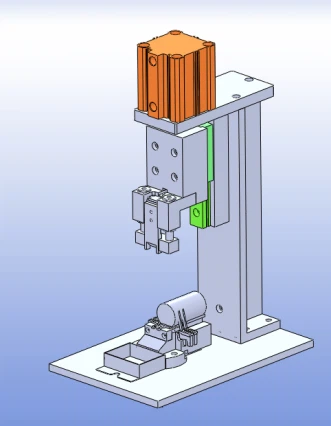
If you’re interested in learning more about our Dry Electrode Calendering Machines or want to explore how they can improve the over – discharge resistance of your electrodes, don’t hesitate to reach out. We’d love to have a chat with you and discuss how we can work together to take your battery manufacturing to the next level.
Prismatic Cell Assembly References:
- "Battery Electrodes: Principles and Applications"
- "Advances in Calendering Technology for Battery Manufacturing"
- "Over – Discharge Phenomena in Lithium – Ion Batteries"
Shenzhen Meirui Zhida Technology Co., Ltd.
Shenzhen Meirui Zhida Technology Co., Ltd. is one of the most professional dry electrode calendering machine manufacturers and suppliers in China, specialized in providing high quality products with low price. If you’re going to buy bulk discount dry electrode calendering machine made in China, welcome to get pricelist and quotation from our factory.
Address: 104 Building 6, Second Industrial Zone, Shanmen Community, Yanluo Street, Baoan District, Shenzhen China
E-mail: mrbest@szmrbest.com
WebSite: https://www.szmrbest.com/
