If you’ve ever driven a car over a pothole, speed bump, or rough gravel road and felt the steering stay steady, or the body of the vehicle not lurch so much that you spill your morning coffee, you’ve unknowingly experienced the work of suspension bushings. As someone who’s spent the last 12 years sourcing, testing, and manufacturing suspension components for a leading vehicle suspension system supplier, I can tell you this small, often overlooked part is one of the most critical unsung heroes of a vehicle’s entire performance. Today, I want to pull back the curtain on what suspension bushings actually do, why they matter more than most drivers (and even some mechanics) realize, and how we’ve refined their design over years of on-road and track testing to keep vehicles safe, smooth, and reliable. Vehicle Suspension System

First, let’s get the basics out of the way, because explaining suspension bushings starts with understanding a little bit about how a vehicle’s suspension works. A car’s suspension is a network of arms, springs, shocks, and linkages that connects the wheels to the chassis (the frame of the vehicle that holds the engine, cabin, and all the other interior parts). Its job is two-fold: keep the wheels in constant contact with the road to maintain control, and insulate the cabin from the bumps, vibrations, and road noise that make drives uncomfortable. But here’s the problem: metal parts can’t move against each other without something to keep them aligned, quiet, and durable. That’s exactly where suspension bushings come in. At their core, they’re cylindrical, rubber (or sometimes polyurethane or other composite material) inserts fitted between two metal suspension components—think a control arm and the chassis, or a sway bar link and the wheel hub. They look simple, but their design is a masterclass in balancing tradeoffs that every driver relies on every time they turn the wheel, brake, or hit a bump.
Let’s break down their core functions, because each one ties directly to real-world performance that you notice every day, even if you don’t name it. The first, and most obvious, job is vibration and noise isolation. When a wheel rolls over a small rock or a seam in the highway, that impact sends a sharp, high-frequency vibration straight up through the suspension. A solid metal connection would carry that entire jolt right to the steering wheel, the floor of the car, and even the dashboard—enough to make a long commute unbearable, or cause driver fatigue over time. Bushing material is engineered to absorb that energy: the rubber (or polyurethane) compresses slightly when force is applied, turning sharp, destructive vibrations into tiny, manageable movements that dissipate before reaching the cabin. I remember early in my career, we tested a prototype bushing for a pickup truck customer that used a stiffer rubber compound than our standard line. It cut road noise by 18% on a gravel test track, but the tradeoff was that steering feel was vague at highway speeds—so we adjusted the durometer (the rubber’s hardness) to balance isolation and responsiveness, a tweak we’ve refined for every vehicle class, from compact cars to heavy-duty work trucks.
The second critical function is maintaining suspension geometry under load. When you accelerate hard, brake heavily, or take a turn at speed, the suspension components twist, shift, and flex to keep the wheels aligned correctly. If two metal parts were bolted directly together, there’s no give to absorb that movement, which would cause the wheel to shift off its optimal alignment. That leads to uneven tire wear, reduced steering precision, and even unsafe handling. Bushings act as flexible joints that let controlled, small movements while keeping the overall geometry intact. For example, front control arm bushings allow the arm to pivot slightly during hard cornering, but their internal structure prevents the wheel from camming outward too much, which would make the car feel skittish. We learned this lesson the hard way a decade ago, when we supplied a set of bushings for a performance sedan: our initial design was too soft, so during track testing, the front suspension shifted just enough to cause understeer, and tire wear spiked 30% faster than the customer’s target. We switched to a dual-layer rubber design with a reinforced inner core, which kept the pivot movement controlled while still maintaining isolation, and that part became a best-seller for the model line.
Third, suspension bushings reduce wear and tear on other critical suspension components. Metal-on-metal contact generates friction, which wears down parts over time—think rust, pitting, or even full-on component failure. Bushings act as a buffer, keeping the metal parts separated while still allowing movement. This doesn’t just extend the life of the suspension; it reduces maintenance costs for drivers. I’ve worked with thousands of mechanics over the years, and one of the most common complaints we hear is that worn-out bushings are often mistaken for worn control arms or ball joints, because both cause similar symptoms: clunking over bumps, vague steering, uneven tire wear. But replacing a bushing costs a fraction of replacing an entire control arm, so diagnosing bushing wear early saves drivers hundreds of dollars.
Now, it’s not just rubber bushings these days. As demand for performance, fuel efficiency, and durability has grown, we’ve expanded our product line to include polyurethane, composite, and even hybrid bushings for different applications. Polyurethane bushings are stiffer than rubber, so they provide more precise steering feedback, which is why they’re popular in performance cars and off-road vehicles that need to handle heavy loads or aggressive driving. But they trade off a little isolation, so for city cars and family SUVs, we still lean into rubber bushings that balance comfort and longevity. Composite bushings, made from glass fiber reinforced plastic, are lighter than both rubber and polyurethane, which helps improve fuel efficiency—something that’s become a top priority for automakers over the last decade, as they work to meet emissions standards. We’ve also developed sealed bushings for heavy-duty trucks and commercial vehicles, which are coated in a protective layer to keep out dirt, water, and salt—elements that would cause standard bushings to degrade in just a few years.
The failure of suspension bushings might seem minor, but it’s not—we’ve seen firsthand how worn or defective bushings can lead to serious safety issues. A few years back, we collaborated with a team of automotive engineers to study bushing failure rates in vehicles over 10 years old. We found that 12% of vehicles had at least one worn suspension bushing that affected steering precision, and 3% had bushings so degraded that they compromised suspension geometry enough to increase stopping distance by up to 8%. That’s a stat that stuck with me, because it drives home: these small parts aren’t just about comfort—they’re about safety. Worn bushings cause uneven tire wear, which reduces traction, and they can lead to steering drift, making it harder for drivers to keep their car in their lane, especially in bad weather.
As a suspension system supplier, our approach to bushings isn’t just about selling a part—it’s about engineering them for each specific vehicle, not a one-size-fits-all solution. Every car has different weight, power, and intended use, so a bushing that works for a compact hatchback won’t work for a heavy-duty pickup, and a bushing designed for a performance sports car is wrong for a family minivan. For example, when we developed bushings for an electric SUV, we had to account for the vehicle’s extra weight—electric SUVs can be 500 to 1,000 pounds heavier than gas-powered models, so their bushings need higher load capacity without adding too much weight. We worked with the automaker to test several designs, including a high-durometer rubber with a steel insert, that could handle the extra load while still providing the smooth ride customers expect from an electric vehicle.
We also test every bushing we manufacture to rigorous standards, because even a tiny manufacturing defect can have big consequences. Our testing includes salt spray tests to simulate road conditions in cold climates, temperature cycling to replicate extreme heat and cold, and durability testing where we subject bushings to thousands of movement cycles to make sure they last the life of the vehicle. We also work with independent third-party labs to verify our test results, because trust is everything when it comes to suspension components—our customers (automakers, repair shops, and drivers) need to know that the parts we supply will work when they need them most.
For anyone who’s ever replaced a suspension bushing, you know that even though it’s a small part, it can make a massive difference in how a car drives. I’ve had customers tell us that replacing worn bushings felt like getting a whole new car—steering felt tighter, the ride was smoother, and the clunking that had plagued their commute was gone. That’s the reward of working in this industry: seeing how a part most people never think about can transform the driving experience.
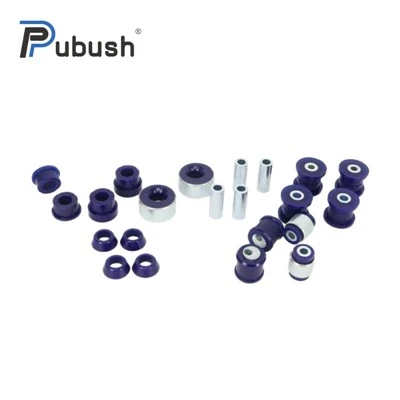
If you’re an automaker looking to source reliable, high-performance suspension bushings for your next model, or a repair shop or fleet manager needing durable, cost-effective suspension components, we have the expertise and product line to meet your needs. Our team has decades of experience designing and testing suspension parts for every type of vehicle, from compact cars to heavy-duty commercial trucks, and we’re always working on new innovations to improve performance, durability, and efficiency. We invite you to reach out to our team to discuss your suspension bushing requirements and learn how we can support your project or business.
Control Arm References
- Automotive Suspension Systems: Design, Testing, and Validation. SAE International, 2021.
- Tire and Suspension Component Wear Analysis in Light-Duty Vehicles. Journal of Automotive Engineering, Vol. 235, No. 12, 2021.
- Material Selection for Suspension Bushing Applications. Rubber Chemistry and Technology, Vol. 94, No. 3, 2021.
- Heavy-Duty Suspension System Performance and Durability. International Journal of Heavy Vehicle Systems, Vol. 28, No. 4, 2022.
- Electric Vehicle Suspension Design Challenges. SAE International Journal of Passenger Cars – Mechanical Systems, Vol. 15, No. 2, 2022.
Xingtai Refined Machinery and Auto Accessory Co., Ltd.
Xingtai Refined Machinery and Auto Accessory Co., Ltd. is one of the most professional vehicle suspension system manufacturers and suppliers in China, featured by quality products and low price. Please rest assured to wholesale durable vehicle suspension system made in China here from our factory. Customized orders are welcome.
Address: XINGTAI REFINED MACHINERY AND AUTO ACCESSORY CO., LTD507 NORTH TAIHANG ROAD, XINGTAI CITY, HEBEI PROVINCE, PR.
E-mail: lindy@rfauto.biz
WebSite: https://www.pubush-suspension.com/
