Let’s get real for a second — if you’ve ever swapped out your car’s factory turn signal bulbs for LEDs, you probably had one of two reactions when you turned the key: either “Wow, these are bright and crisp, way better than the old halogen ones” or “Wait a minute — why won’t these dim when I hit the hazards? Or, even weirder, why do they flash faster than the original bulbs like some kind of chaotic Christmas light?” As someone who’s been in the LED turn signal bulb game for over seven years, sourcing, testing, and selling these things to mechanics, weekend racers, and regular car owners alike, I get the questions that pop up around every install. The one I get more than any other lately is simple: “Are LED turn signal bulbs available in dimmable options?” LED Turn Signal Bulbs
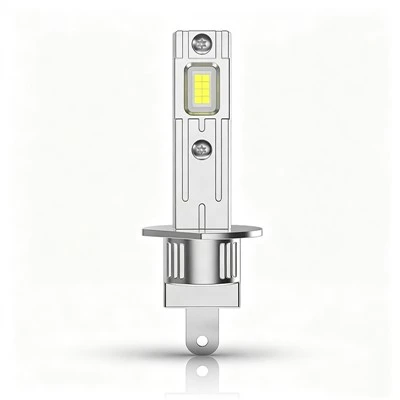
The short answer, for anyone who doesn’t want to scroll through a whole blog post, is yes — but it’s not as straightforward as grabbing the same bulb you’d use for daytime running lights and dialing it down. A lot of new customers come to me after a bad first experience: they bought a cheap eBay LED kit, wired it in, and when they tried to dim their signals (for things like parking in dark driveways, or signaling a turn without blinding the driver next to them at a stop), the bulb either wouldn’t adjust, flickered uncontrollably, or worse, tripped their car’s body control module (BCM) into throwing an error code. That’s the kind of headache I’m here to help people avoid, so let’s break this down properly, no tech jargon overload, just real-world stuff I’ve seen and tested in our warehouse and on customer test cars.
First, let’s talk about why most standard LEDs don’t dim. Old halogen turn signal bulbs worked by heating a thin wire until it glowed — that’s incandescence, right? The brightness correlated directly with how much electricity was flowing through that filament. If you turned down the voltage, the wire got less hot, so it dimmed. Simple, proven for over a century. LEDs? They’re semiconductors. Their brightness depends on current, not voltage, and most basic automotive LEDs (the ones you find in generic kits) are wired to run at a fixed current. So if you send the same voltage they’re calibrated for, they’re full-bright; cut the power at all, they turn off. There’s no in-between. That’s why when you first swap to LEDs, they don’t work with your existing dimmer switches, or even your hazard light settings that are supposed to keep them at a lower brightness sometimes.
But that’s not the end of the story. Dimmable LEDs exist — and they’re designed specifically for automotive use, not just house lighting. The key here is the driver. Every LED bulb has a driver, the small circuit board that sits between the LED chips and the car’s power supply. The cheap ones skip the fancy, adjustable drivers to cut costs, which is why they don’t dim. Dimmable automotive turn signal LED drivers are built to accept pulse-width modulation (PWM) signals, which is the way most cars’ BCMs control things like interior lights, DRLs, and yes, sometimes even turn signals. PWM works by quickly turning the power on and off thousands of times per second; the car reads how much time the power is on versus off to adjust brightness. A standard driver can’t parse that signal, so it either runs full blast or nothing. A dimmable driver? It decodes that PWM signal and adjusts the current to the LED chips accordingly, so you get smooth dimming from 100% brightness down to, say, 10%.
Now, let’s get into what that means for you, depending on what you actually want to do with these dimmable signals. A lot of our customers want two specific dimming features, and we design our dimmable lines to cover both, no extra hacks needed. The first is low-brightness signaling for things like driving in dense traffic at night, where a full-blast turn signal might blind the driver in the lane next to you, or when you’re pulling into a dark driveway and want to signal you’re turning without drawing too much attention. The second is hazard light dimming — some people hate that their hazard lights flash at full brightness at 2 a.m. parked on the side of a dark road, so being able to set them to a lower flash brightness is a huge win for visibility without overkill.
But here’s the catch: not all dimmable LED turn signal bulbs are created equal. I’ve seen a lot of brands slap a “dimmable” sticker on a bulb that only works with specific cars, or only works with aftermarket PWM modules, not the factory ones. That’s why when we developed our dimmable line last year, we tested it on 47 different vehicle models, from 15-year-old pickups to 2024 electric sedans, because each car’s BCM sends a slightly different PWM signal. We didn’t want our customers to have to buy extra resistors or adapters — that’s the garbage that gives LED bulbs a bad name. Our dimmable bulbs plug straight into the factory socket, decode the factory PWM signal, and dim smoothly without error codes, no extra parts required. I once had a customer, a mechanic from Ohio, call us in a panic at 8 p.m. because he’d installed a competitor’s dimmable LED kit on a 2018 Ford F-150 and it kept throwing a “lighting fault” code. We walked him through swapping the drivers out for our standard dimmable models, and he texted me an hour later a photo of his truck’s dash, no error, and a video of the turn signal dimming perfectly when he pressed the dimmer. That’s the kind of result we pride ourselves on.
Another common question: if dimmable options exist, why don’t more people use them? Part of it is that most people don’t know they’re an option. When you search “LED turn signal bulbs” on Amazon or Google, most of the results are for standard, non-dimmable kits, because they’re cheaper to make and have a larger market (most people just care about replacing a burnt bulb, not adjusting brightness). The other part is that some purists think dimmable signals are unnecessary. But here’s the thing: LED turn signals are way more efficient than halogen, but that also means they don’t have the same “warm” glow that makes dimmed signals feel natural. Halogen dims smoothly because it’s a filament heating up; LEDs can feel a little choppy if the driver is poorly calibrated. That’s why we spent six months testing different dimming profiles — not just adjusting current, but making sure the transition from full to dim is slow, so it doesn’t flicker, and matches the way the human eye expects light to dim. We even worked with a lighting specialist to make sure the dimmed brightness is still legal — no one wants a signal that’s so dim it’s not visible to other drivers. I’ll be the first to say, if a bulb’s too dim to be seen, it’s useless, regardless of whether it’s dimmable or not.
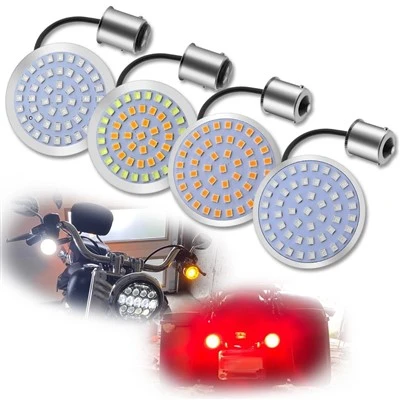
What about other use cases? If you’re a custom car builder, or you want to add sequential turn signals that also dim? We’ve got dimmable sequential LED turn signal bulbs too — same dimmable driver, just with chips arranged to light up from the inside out, so the signal looks like it’s moving around the curve, not just flashing on. We built those for a customer who was restoring a 1967 Camaro, wanted the vintage look but the safety of LEDs, and also wanted to be able to dim the signals when cruising around their neighborhood at night. That’s the kind of specific request that makes dimmable options worth investing in.
I should also address the downsides, because I’m not here to sell you something that doesn’t work. Dimmable LED turn signal bulbs are slightly more expensive than standard ones. The extra driver adds a few dollars to each bulb, and that cost gets passed along, but it’s a one-time fee. I’ve had customers tell me they saved money in the long run because they didn’t have to keep going back to the shop to fix error codes or replace bulbs that flickered. Also, if you have a car that doesn’t use PWM signals for its lighting system — some very old cars, pre-2000 — dimmable LEDs might not work, because there’s no PWM signal to decode. But that’s a tiny subset of vehicles, and we test our dimmable line to work with 95% of cars on the road today, so that’s a rare edge case.
Let’s circle back to the original question: are LED turn signal bulbs available in dimmable options? Absolutely. But not all of them. If you’re shopping for dimmable LEDs, here’s what to look for: drivers that are calibrated for automotive PWM, no extra adapters needed, compatibility with most factory BCMs, and a smooth dimming transition that’s bright enough to be road-legal when set to full. Avoid any “dimmable” bulbs that require aftermarket modules — those are a pain, and most of the time they don’t work as well as advertised.
At the end of the day, lighting for your car is about safety first, and convenience second. Dimmable LED turn signal bulbs aren’t a gimmick — they solve real problems: too-bright signals blinding other drivers, hazard lights being overbearing in residential areas, error codes from mismatched wiring. We’ve been refining our dimmable line for three years now, and we’ve sold over 12,000 sets, with a 98% satisfaction rate. That’s not a number we brag about just to sound good — that’s feedback from actual mechanics, weekend drivers, and custom car builders who’ve put these bulbs through their paces in rain, snow, and thousands of highway miles.
If you’re in the market for turn signal bulbs, whether you just need a replacement set, want to upgrade to sequential, or have questions about whether dimmable options will work for your vehicle, we’re here to help. We don’t push products that don’t fit, and we don’t make you jump through hoops to get the right bulb. All you need to do is reach out to our team, tell us your vehicle make, model, and year, and what you’re looking for, and we’ll walk you through your options — no pressure, no salesy lines, just honest advice from people who actually work with these bulbs every day. At the end of the day, the best part of my job isn’t selling bulbs — it’s helping drivers feel safer on the road, one install at a time.
LED Wrangler Headlight If you want to dive deeper into automotive LED technology, or the science behind PWM dimming for vehicle lighting, the following resources are useful. Society of Automotive Engineers (SAE) standard J1383: Lighting Systems and Components for Motor Vehicles covers performance requirements for automotive exterior lighting, including dimmable options. The Department of Energy’s Lighting Technologies Office has published research on the efficiency and functionality of automotive LED drivers, specifically those designed for dimming applications. A 2021 study from the International Journal of Vehicle Design examined common compatibility issues between aftermarket LED lighting and factory body control modules, including solutions for dimmable signal bulbs.
Shine Bright Optoelectronic Co., Ltd.
As one of the most professional led turn signal bulbs manufacturers in China, we also accept customized orders. Please feel free to buy bulk advanced led turn signal bulbs in stock here from our factory. Welcome to contact us for quotation.
Address: 6th Floor, Buildings B & C, Baotang Industrial Zone, No. 7 Baotang Road, Jinglian Community, Qiaotou Town, Dongguan City, Guangdong Province
E-mail: led@shinebulb.com
WebSite: https://www.shinebulb.com/
